

Factors that Make a Mobile App Design Truly User-Centric
User-centric design focuses on the end user from the very first sketch to the final deployment. It doesn’t just solve problems; it anticipates needs, reduces friction, and aligns with user behavior naturally and seamlessly. Startups and small businesses can craft mobile experiences with a solid strategy. Let’s look at the main parts of user-centric app design. Modern practices and technologies are shaping this future. These include UI/UX design services, AI development services, and custom software solutions for SMBs.
Understanding the User Beyond the Interface
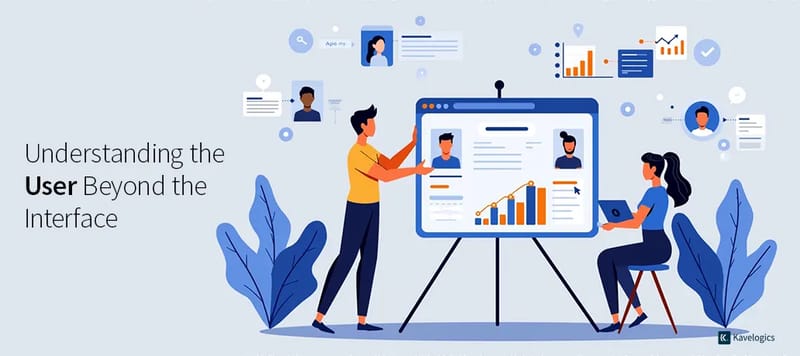
A user-centric mobile app is built on a deep understanding of user goals, pain points, preferences, and context. This foundation isn’t based on assumptions but on data, research, and empathy. Great UI/UX design for small businesses starts here. You gather insights through interviews, surveys, analytics, and observing behavior. Designers and developers now use AI to gain deeper insights into user behavior.
AI automation helps small businesses by allowing apps to adapt and change based on how users interact with them. Apps can analyze usage data. This helps them change interfaces, suggest features, and automate workflows. These adjustments can reduce friction. This responsiveness makes users feel understood. The app acts more like a personal assistant than a machine. It remembers your preferences, adapts to your routines, and gives helpful suggestions. Such personalization is the hallmark of a great user experience.
Simplicity and Functionality at the Core
No matter how beautiful a design is, if users can’t intuitively understand how to use an app, they’ll abandon it. A truly user-centric design strikes a balance between simplicity and rich functionality. Each screen should have a purpose. Every button must lead to something meaningful. Also, every action should provide feedback. Through UI UX designing services, developers now prioritize usability testing at every stage.
Prototypes are tested for flow, consistency, and intuitiveness. This helps designers improve layout, hierarchy, and navigation early on. This way, they can avoid costly mistakes. Small businesses, in particular, benefit from design clarity. Clear visual cues and smooth onboarding help keep users engaged and coming back. Since users have limited time and attention, these elements are key. Redesigning a website for small business growth often means changing the user flow. This helps cut down clutter and boosts conversion pathways.
Designing for Scalability and Long-Term Value
A mobile app isn’t a one-time project; it’s a growing product. User-centric apps are built with scalability in mind. Startups aiming to grow must ensure their design system and infrastructure can evolve with user needs and market shifts. That’s where full-stack web development services come into play. These services combine front-end and back-end logic. This way, the app can grow while keeping a great user experience.
No matter if you’re launching an MVP or expanding worldwide, the app’s performance, security, and interface must stay consistent. Modern custom software solutions for startups use modular design. This means you can add new features or change existing ones without overhauling everything. As user expectations grow, scalable design allows for feature expansion while maintaining simplicity.
Leveraging AI to Improve Experience in Real-Time
Artificial intelligence is at the core of smart user-centric design. It lets mobile apps provide real-time help, tailored experiences, and smart automation. This goes beyond standard user flows. AI-powered web development for small businesses uses real-time data to enhance UX dynamically. An AI fitness app could suggest workouts based on your past performance and goals. A finance app might customize dashboards depending on your spending habits.
AI development services enable apps to:
- Recognize voice
- Predict user needs
- Autofill forms
- Guide users through complex tasks
These interactions seem natural. AI acts like a human, learning and adapting just like a real assistant. AI in no-code app development helps small business owners add smart features to their mobile apps. They can do this without needing to hire full AI engineers. This lowers the barrier to entry and levels the playing field in a crowded digital market.
Embracing No-Code Development for Fast and Agile Design
In a fast-moving market, speed is crucial, but speed shouldn’t come at the cost of user experience. That’s why no-code SaaS platform development for SMBs is revolutionizing app creation. No-code platforms let designers and business owners quickly build user-friendly apps. They can just drag and drop ready-made components. These platforms focus on UI templates that use modern UX principles. They let non-tech teams create polished apps easily, without sacrificing quality.
Many no-code platforms now have AI plugins. This lets small businesses use AI automation easily. A restaurant could use a no-code app with AI. This app can manage online reservations, handle customer feedback, and suggest menu items based on what customers like. This agility helps businesses quickly adapt to customer feedback. They can then change their design based on real-world insights.

Personalization at the Center of Every Touchpoint
A great mobile app feels personal, like it was designed for each user individually. With advances in AI automation, apps are now capable of delivering such personalized experiences at scale. Every tap, swipe, and input provides data that can be used to enhance personalization. This might be as simple as remembering a user’s name and preferences, or as complex as tailoring entire workflows to individual goals.
Custom notifications, smart dashboards, and personalized onboarding sequences show user-centric design. They rely on AI and automation. Custom software solutions for SMBs often include these features by default. This helps to ensure long-term engagement. When an app “gets” the user, that emotional connection fosters trust, and trust keeps users coming back.
Continuous Improvement Through Feedback and Analytics
User-centric design is never complete. It evolves alongside the user. This philosophy of continuous improvement is what separates successful apps from those that fade away. Modern development pipelines include real-time feedback systems. Users can report bugs, suggest improvements, and review new features right in the app. Behavioral analytics gives quiet feedback. They show where users leave, which features they use the most, and what flows confuse them.
Teams can use tools for website redesign to help small businesses grow. They can improve user journeys by using feedback. Each update is an opportunity to improve usability, deepen personalization, and enhance functionality. Kavelogics, for instance, builds strong feedback loops into its development. They use agile sprints, which help improve UX even after the app is live.
Accessibility and Inclusivity by Default
Designing for everyone is no longer optional. A user-centric mobile app ensures accessibility and inclusivity from the start. This includes:
- Simple fonts
- Voice control support
- Clear color contrast
- Easy keyboard navigation
Inclusive design doesn’t just improve usability for people with disabilities, it makes the app easier for everyone. Larger buttons assist users with small screens or those on the move. Clear text helps users in low light or with limited reading skills. Building inclusive apps is not only ethically responsible but strategically smart. It expands your user base and reflects positively on your brand.
Cross-Platform Consistency and Omni-Channel Design
Users don’t just use one device, they switch between phones, tablets, and desktops seamlessly. A user-centric mobile app must offer a consistent experience across platforms. Custom software solutions for startups help developers build cross-platform apps. These apps keep design and functionality consistent across devices. Whether a user accesses the app on Android, iOS, or the web, the experience should feel familiar and intuitive. Cross-platform design is about recognizing the user's journey, not just their device. It enables seamless transitions, encourages deeper engagement, and builds loyalty over time.
Designing for Delight
User-centric mobile app design is not a checklist, it’s a philosophy. It places the user at the center of every decision, from the initial concept to post-launch updates. Now, small businesses and startups can achieve excellence. Tools like no-code development, AI services, and full-stack development make this possible. Kavelogics helps businesses innovate with a custom solutions company.
So, user experience standards keep rising. In a competitive market, only those who deeply understand and consistently serve their users will thrive. In 2025, the future of mobile app design is not just smart, it’s human-centered. And that’s what makes it truly transformative.