


The AI and UX Synergy: Why It Matters Now More Than Ever
In today's digital world, where automation and hyper-personalization are expected instead of a luxury, user experience (UX) design has transformed from a decorative layer to a vital strategic tool. Successful AI-powered web development for small businesses depends on how the AI interacts with humans, not just on the AI itself.
AI is a master of data; it can segment audiences, analyze patterns in behavior, tailor information, and even forecast a user's next move. Everything from chat assistance to content suggestions and interface modifications may be automated with it. The issue with this is that untrained, raw intelligence is like a self-driving automobile without a steering wheel. Strong but unable to find direction.
At this point, UX serves as a link between human users and intelligent technology. With careful UX design, AI's potential is framed within experiences that are:
- Intuitive—Users don’t need tutorials to engage with your site.
- Contextual—AI decisions are presented in ways that make sense for individual users.
- Human-centered—Even when automated, the interaction feels natural and empathetic.
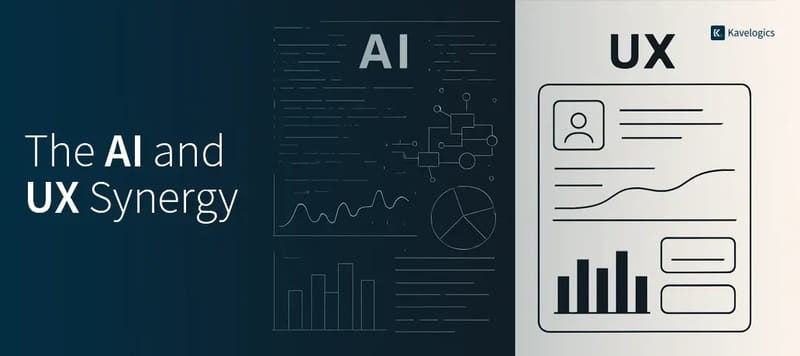
Imagine, for instance, that an AI uses browser history to recommend a product. The correct place, time, and tone—subtle, not spammy—are all guaranteed by an excellent user experience. Even precise forecasts may seem overpowering or invasive without this.
In short, user experience (UX) gives AI a face—and a soul. It is what gives your technology a sense of usefulness, approachability, and, eventually, trustworthiness. That kind of digital empathy is vital for small firms, where every customer interaction is important.
How UX Supercharges AI-Powered Web Development
1. Personalization That Feels Natural
AI is quite good at making dynamic user experiences. However, UX gives them a deliberate and seamless feel. UX specifies how AI-powered content is presented in a way that customers genuinely like, from personalized landing pages to dashboards that automatically adjust.
Pro Tip: Inform your UX redesigns with heatmaps and AI-powered user behavior tools like FullStory or Hotjar.
2. Reducing Cognitive Load with Smart Interfaces
Users are frequently overloaded with information on small business websites. AI allows you to customize what consumers see. However, UX makes sure people can see it. Complexity can be made simpler with the use of strategies like micro-interactions and progressive disclosure.
For example, the UX design will display a streamlined layout with unambiguous onboarding procedures when AI detects a first-time visitor.
3. Voice, Chat, and Visual Assistants
Visual searches, voice commands, and chatbots are new input methods brought forth by AI. Accessible, user-friendly, and brand-consistent are all guaranteed by UX design.
Key Insights: Although a GPT-4-powered chatbot is amazing, it runs the danger of discouraging consumers more than it aids them in the absence of a clear UX flow and fallback states.
4. Accessibility and Inclusivity
AI tools can facilitate dynamic font scaling, auto-translations, and screen readers. However, UX directs the smooth integration of these elements for users with different devices, languages, or skill levels.
In short, UX transforms AI from a feature into a tool that gives each user more power.
Design for Scale, Not Just Launch
The needs of users in startups and small businesses change as they expand. A well-thought-out UX system is proactive rather than reactive. Because it foresees change, the product can adjust without requiring a whole redesign. This is where AI and UX work together to great effect. SMBs may maintain their digital platforms in line with user expectations without constant manual intervention by utilizing AI's capacity to observe real-time usage patterns, identify behavioral shifts, and even recommend UI updates automatically.
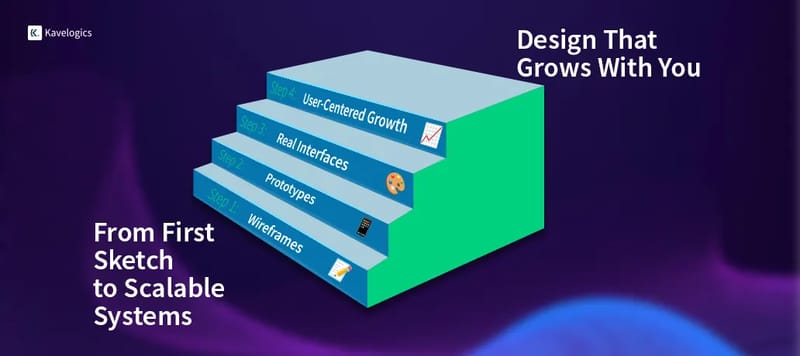
Design tools like Figma and Adobe XD provide collaborative settings for iterative UX development for companies looking to grow effectively. In the meantime, teams can now observe, test, and improve user interfaces more quickly than ever before thanks to AI-enhanced platforms like Framer and Uizard, which enable intelligent prototyping. Small teams can produce sophisticated, future-proof user experiences without going over budget or behind schedule because to this combination of automation and creativity.
Conclusion:
AI is changing the frontend, but without careful UX design, this change could turn cold, confusing, or unusable. The sweet spot for small businesses is where empathy and automation meet. UX's human-centered approach and AI's adaptability allow you to create digital experiences that are not just faster but also smarter, more scalable, and more meaningful.
In the future, UX will become ever more crucial to AI-powered web development. Choosing between intuition and invention is not the point. Designing solutions that allow both to coexist will ensure that your people always feel recognized, supported, and connected.